
ARTICLES
Laboratory Practical Skills
2025-06-06
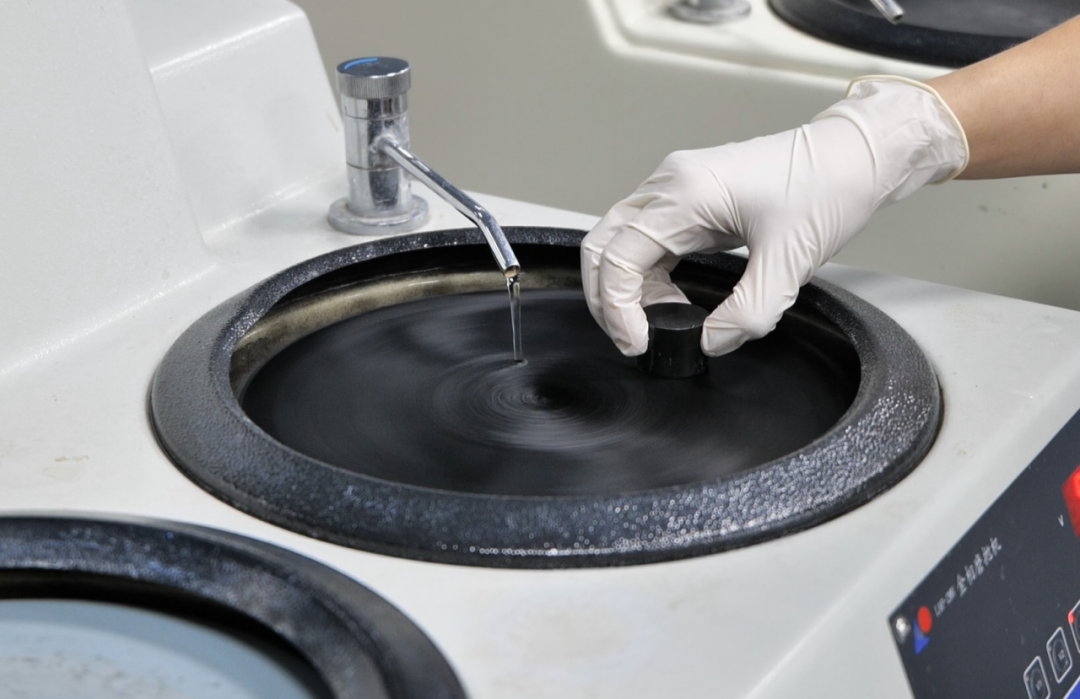
How to improve your hand grinding sample skills
Hand grinding samples is a common problem for many laboratory workers. Have you ever been annoyed by the time-consuming and laborious hand grinding of samples? Don't worry, today we will share two practical tips to help you easily handle hand grinding samples!
2025-06-06
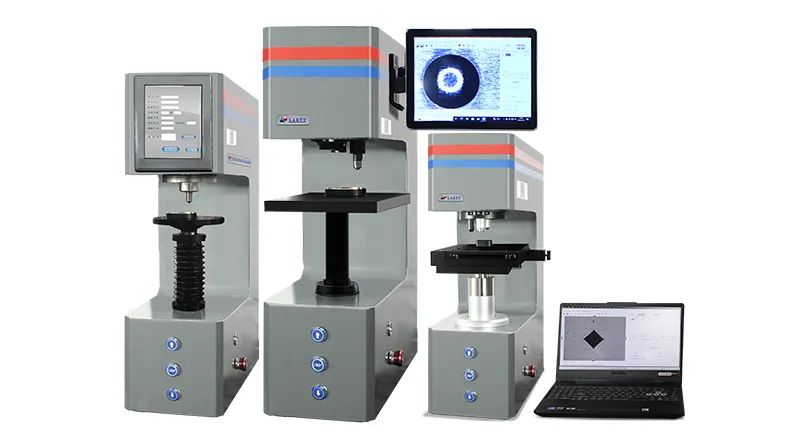
What causes inaccurate hardness measurement?
In laboratory work and production testing, the hardness tester is one of our commonly used measurement tools. However, when many people use the hardness tester, they often get inaccurate measurement results due to some details. Today, let's talk about those easily overlooked wrong operations to help you avoid pitfalls and ensure the accuracy of the measurement results.
2025-06-03
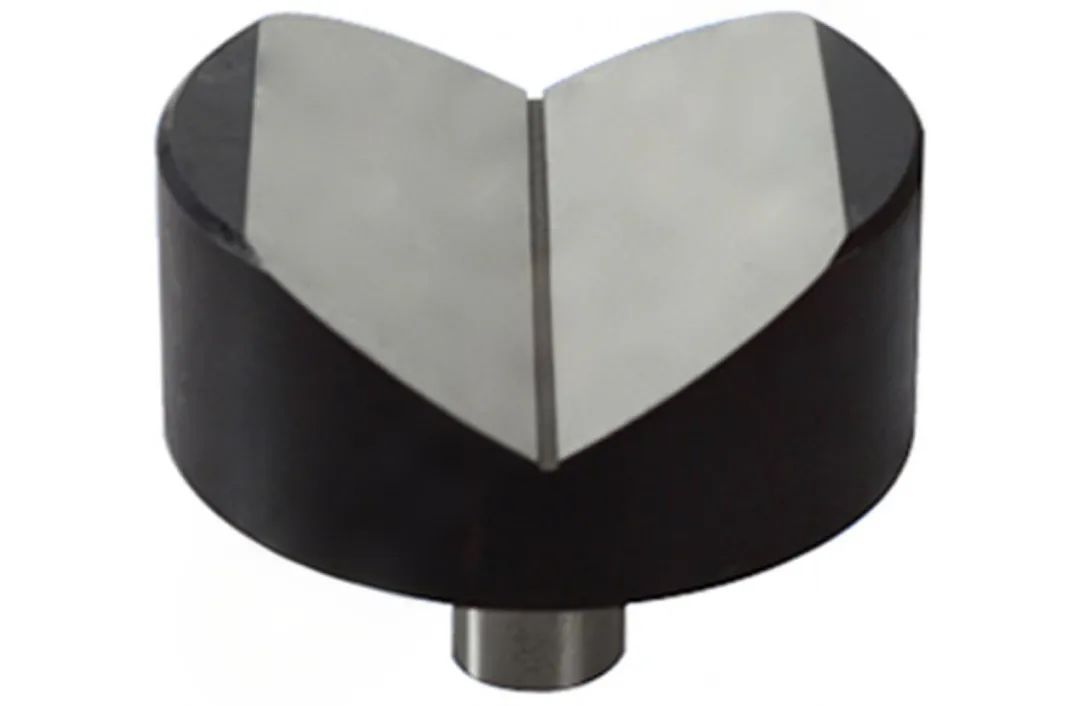
How to measure the hardness of curved samples
In the field of hardness measurement, the shape and surface characteristics of the sample will directly affect the accuracy of the measurement results. Especially for samples with curvature (such as round bars, pipes, etc.), if the conventional platform is used for measurement directly, the results will often be biased. So, how to correctly measure the hardness of such samples? This article will explain it in detail for you.

2025-06-03
What is the hardness tester used for?
In the field of material science and industrial manufacturing, hardness is one of the important indicators for measuring material performance. As a professional measuring tool, the hardness tester can quickly and accurately evaluate the hardness of a material and provide key data support. So, what exactly is a hardness tester? What are its types? What are their characteristics? This article will answer them one by one.

2025-06-03
LABTT Hardness Tester Indenter Replacement Guide
The hardness tester is a key device for material hardness testing, and the indenter is the core component of the hardness tester. Its status is directly related to the accuracy of the test results. In actual use, the indenter will inevitably wear and crack, so it is particularly important to replace the indenter in a timely manner.
2024-05-23
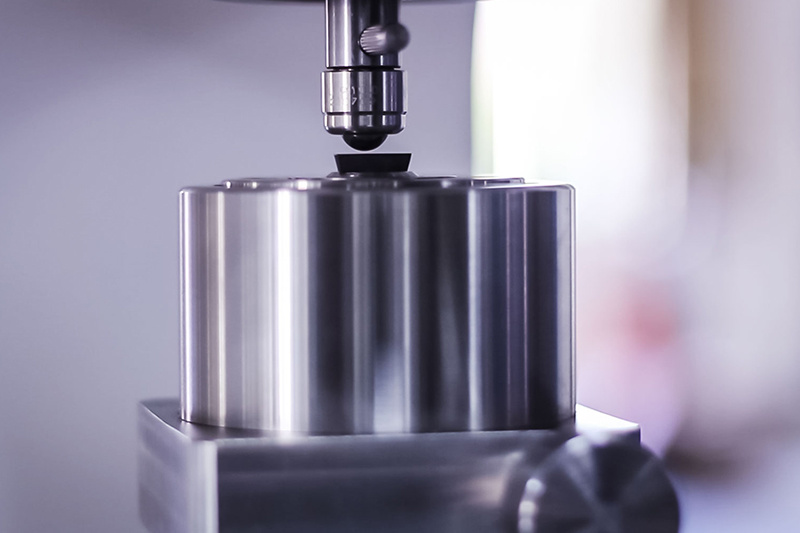
The differences and applications of various hardness testers
According to the Vickers hardness tester, hardness is a performance indicator that measures the degree of softness and hardness of a material. There are many methods and principles for hardness testing, and the measured hardness values and meanings are also different. The commonly used methods are the static load indentation hardness test, which includes Brinell hardness (HB) and Rockwell hardness (HRA), HRB,HRC)、 Vickers hardness (HV), which represents the ability of a material's surface to resist the pressure of hard objects. The Leeb hardness (HL) and Shaw hardness (HS) belong to the rebound hardness test

2024-05-23
Common classification and precautions for hardness testers
Leeb hardness tester, Rockwell hardness tester, Brinell hardness tester, Shore hardness tester, Shaw hardness tester, Babbitt hardness tester, microhardness tester, Mohs hardness tester, Vickers hardness tester, fruit hardness tester, cement hardness tester, etc.

2024-05-23
Notes on the calibration of hardness testers
Before calibrating the HR-150 Rockwell hardness tester, do not use a hardness block to measure the reading error of the hardness tester. First, determine whether the working state of the verified hardness tester is in normal working state. This requires attention to the following issues

2024-05-23
Discussion on troubleshooting methods for hardness tester faults
There are many types of hardness testers, and the commonly used ones in industrial and mining enterprises and research institutions are mainly metal Rockwell, Brinell, Vickers, and microhardness testers. Among them, metal Rockwell and Brinell hardness testers have a simpler structure compared to metal Vickers hardness testers. The repair of common faults is not very difficult. Below is an introduction to common troubleshooting of metal Vickers hardness testers.

2024-05-23
Introduction to Vickers hardness tester
The Vickers hardness tester was first proposed by British scientist Vickers. Under a load of 49.03~980.7N, a square conical diamond with a relative angle of 136 ° is pressed into the surface of the material

